

Grand Prix motorcycle racing is the highest class of motorcycle road racing events held on road circuits, and is sanctioned by the Federation Internationale de Motocyclisme (FIM).
Whilst independent motorcycle racing events have been held since the start of the twentieth century – with the large national events being given the title ‘Grand Prix’ – the foundation of the FIM as the governing body for motorcycle sport in 1949 provided the opportunity to coordinate rules and regulations so that select events could count towards official World Championships.
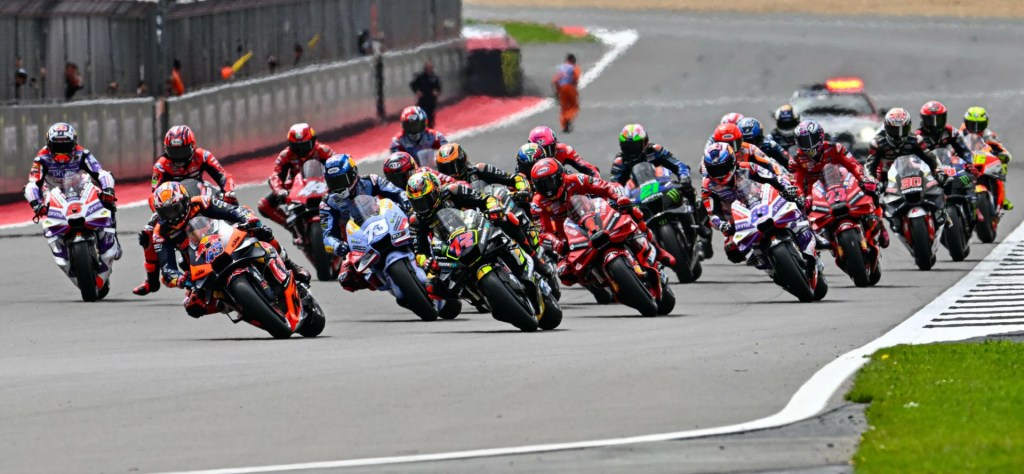
Grand Prix motorcycles are purpose-built racing machines that are unavailable for purchase by the general public and unable to be ridden legally on public roads.
The championship is divided into four classes: the eponymous MotoGP, Moto2, Moto3 and MotoE.
Race Weekend:
Friday:
All on track action begins on the Friday with a Free Practice (FP) that lasts for 45 minutes in the morning and a Practice session that lasts for 60 minutes in the afternoon. Both of these sessions allow the riders to familiarise themselves with the track and adjust their bikes’ setups. Whilst both of these sessions are officially practice sessions, they hold some significance, as the times from the second session determine the proceedings for Qualifying on the Saturday – if you finish Friday’s Practice session in the top 10, you automatically secure a direct place in Q2.
Saturday:
Saturday is the most action packed day of the weekend, beginning with an additional practice session that lasts for 30 minutes. This session allows the riders and teams to finalise their choices and refine their setups before qualifying.
Qualifying:
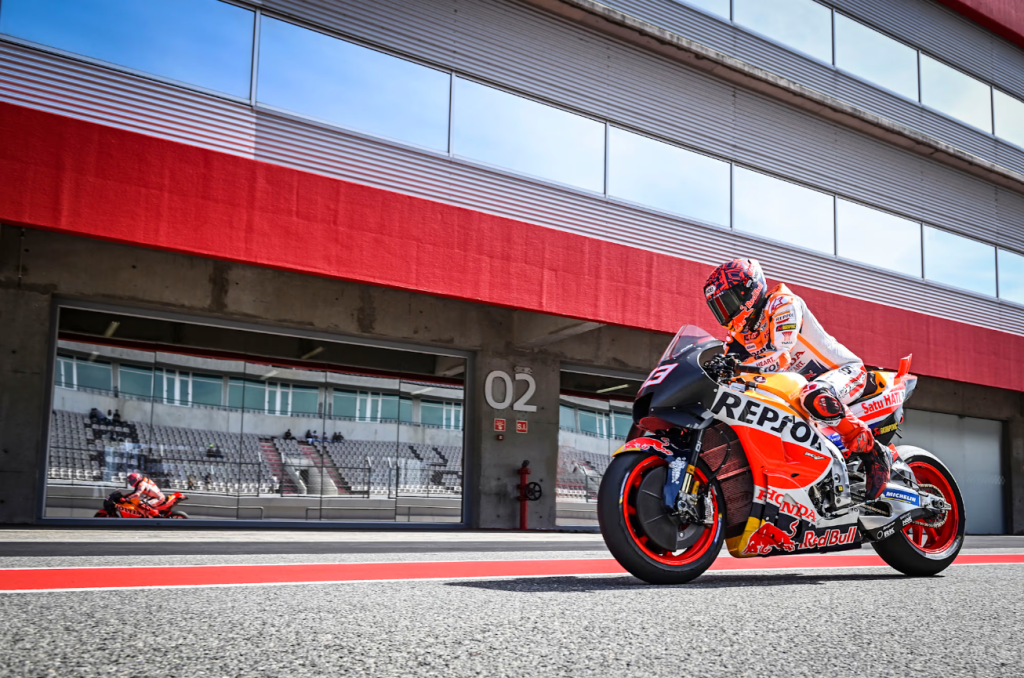
Qualifying is divided into two stages: Q1 and Q2. Q1 lasts for 15 minutes, with all the riders outside of Friday’s top-10 from the practice session participating. The two fastest riders in Q1 advance to Q2 – another 15 minute session, where the remaining 12 riders battle for their starting positions for both the Sprint Race and the Grand Prix Race.
Sprint Race:
Sprint races take place at 15:00 (local time) on the Saturday of each Grand Prix weekend and last for approximately 50% of the full race distance. The results of the second Qualifying session determines the grid positioning for the Sprint.
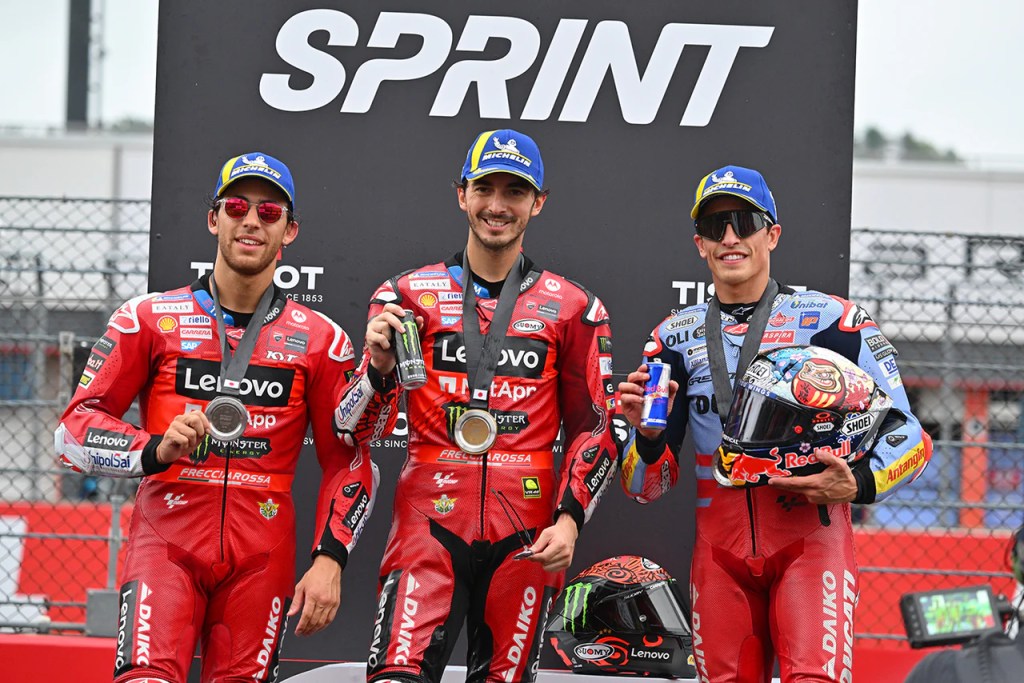
The top nine classified riders after the chequered flag is flown are awarded points. First place is awarded the maximum haul of points and then the points are reduced the further down the grid a rider finishes.
| Position | Points |
|---|---|
| 1st | 12 |
| 2nd | 9 |
| 3rd | 7 |
| 4th | 6 |
| 5th | 5 |
| 6th | 4 |
| 7th | 3 |
| 8th | 2 |
| 9th | 1 |
Sunday:
Sunday’s action begins with a brief warm-up session which allows the riders one final opportunity to make adjustments to their set-ups before the main race.
The main race of the weekend, the Grand Prix, takes place in the afternoon and consists of riders taking to the track for a certain amount of laps (the quantity of laps differs depending on the track being raced).
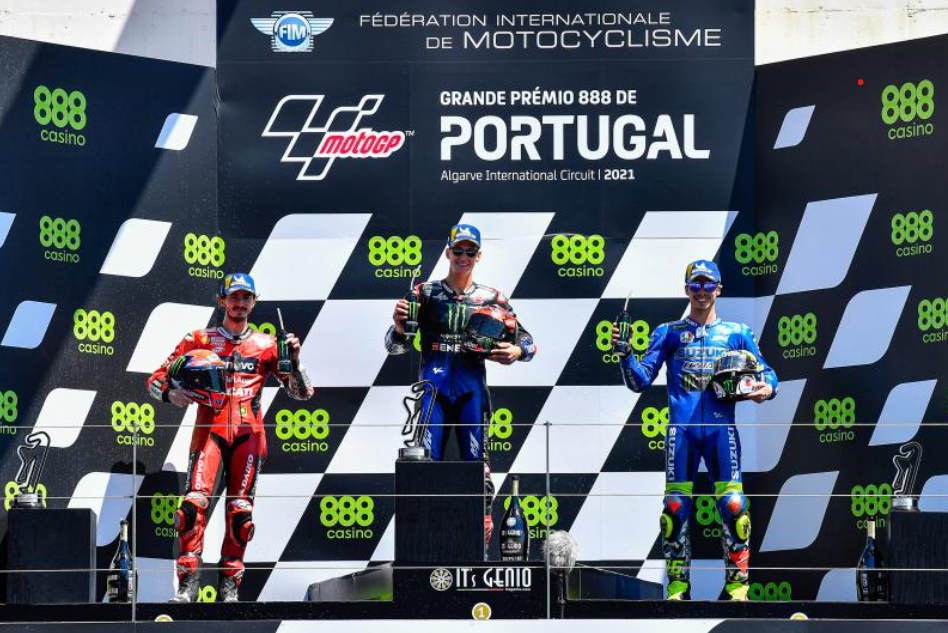
The top 15 classified riders after the chequered flag is flown are awarded points. First place is awarded the maximum haul of points and then the points are reduced the further down the grid a rider finishes.
| Position | Points |
|---|---|
| 1st | 25 |
| 2nd | 20 |
| 3rd | 16 |
| 4th | 13 |
| 5th | 11 |
| 6th | 10 |
| 7th | 9 |
| 8th | 8 |
| 9th | 7 |
| 10th | 6 |
| 11th | 5 |
| 12th | 4 |
| 13th | 3 |
| 14th | 2 |
| 15th | 1 |
Tyres:
With MotoGP there are minimum tyre pressures that are enforced on riders during the Tissot Sprint and Grand Prix races. These can change from track to track depending on the demands of each circuit. A rider’s lap is considered compliant if the average pressure of all the readings reach the minimum established pressure.
As of 2024, the riders have to comply with the minimum pressures for a minimum of 60% of the laps in any race distance over 15 laps, whereas in the Sprint it is 30%.
If there are any infringements in regards to the tyre pressures, the FIM MotoGP Stewards can award an eight-second time penalty in the Sprint Race, and a 16-second time penalty for the Grand Prix race.
Flags:
Flags are an essential tool in MotoGP used by the marshals to communicate information to the riders. These flags fall into two main categories: informative and instructional. Both types of flags play crucial roles in maintaining safety as well as fairness between competitors, however, failing to comply with instructional flags can result in penalties being applied.
Informative Flags:
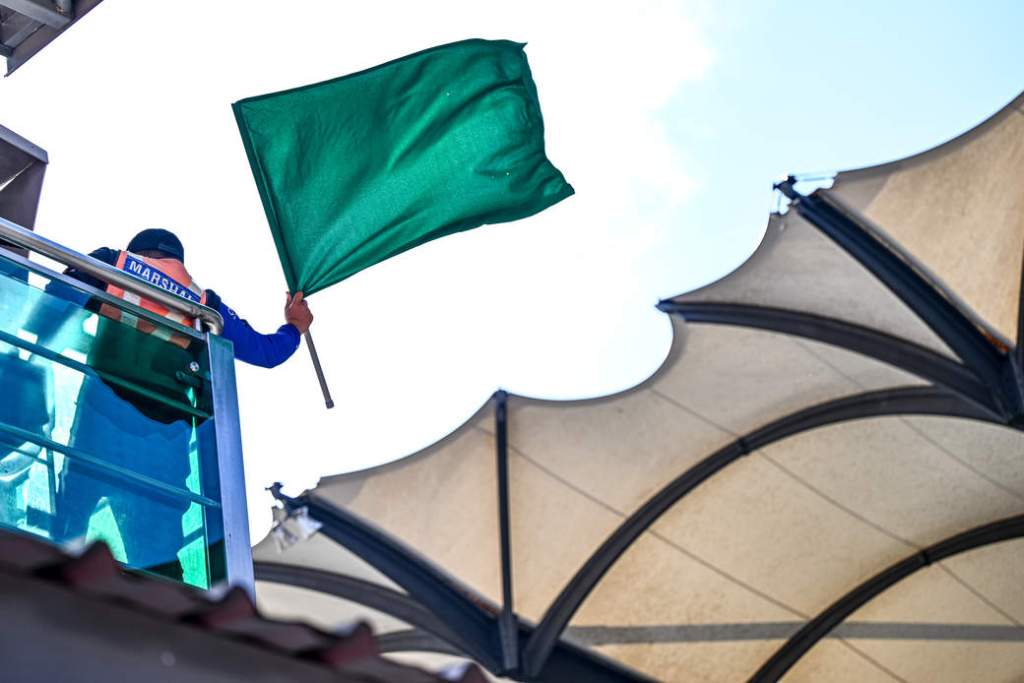
Green Flag – This indicates that the track is clear and ready for racing. During practice sessions, sighting laps, and warm-ups, a green light signals the pit lane is open.
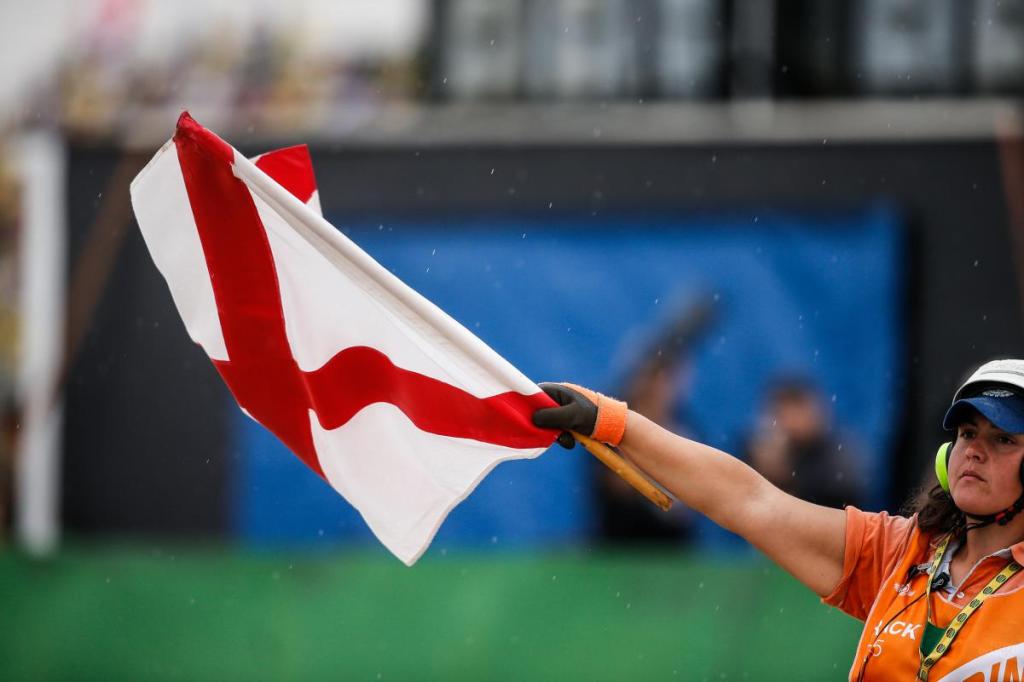
White Flag with Red ‘X’ – This warns riders of rainfall at specific sections of the track.
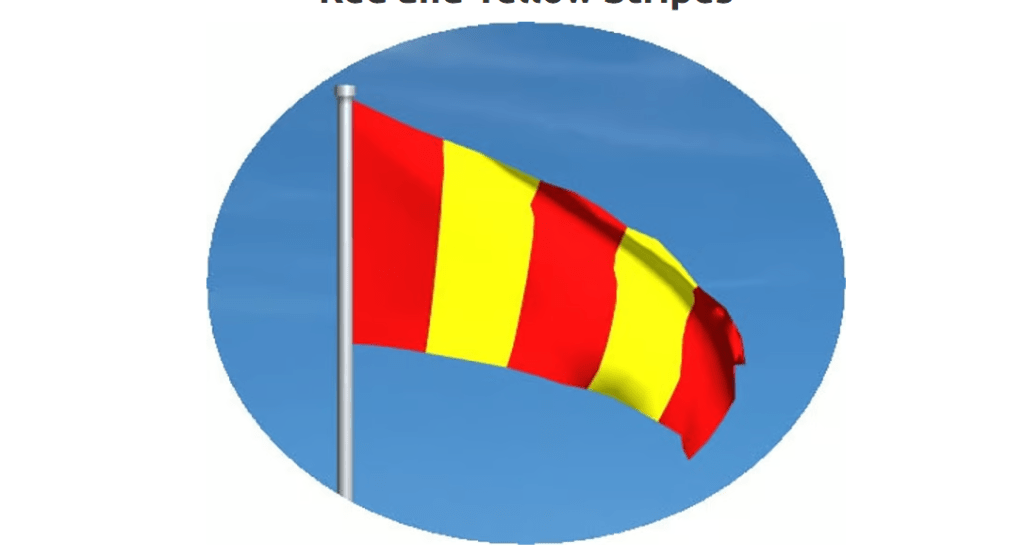
Red and Yellow Striped Flag – This signals reduced surface grip due to debris, oil, gravel or grass. This can be combined with the white flag with a red ‘X’ to show water on the track and that the grip levels have been affected.
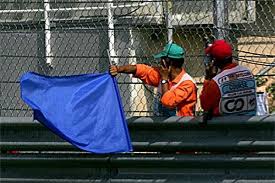
Blue Flag – This informs a rider they’re about to be lapped by a faster rider.
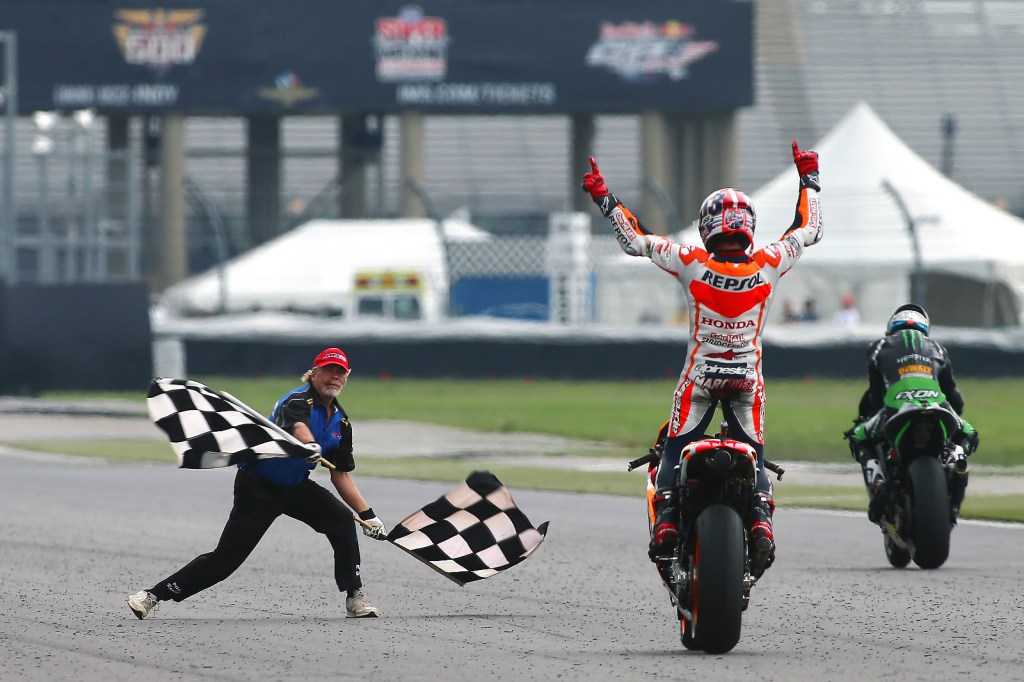
Chequered Flag – This marks the end of the race/session as each rider crosses the finish line.
Instructional Flags:
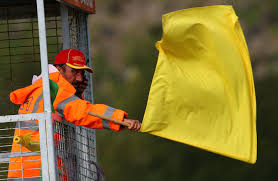
Yellow Flag – This indicates danger ahead; riders must slow down and cannot overtake. A single yellow flag serves as a minor warning, whilst double yellows signify a more serious risk. Overtaking under a yellow flag is penalised just like in other motorsports, such as Formula 1, but can be usually settled by surrendering the position voluntarily.
Red Flag – A red flag halts a session due to a severe incident or unsafe conditions, and riders must return to the pits immediately. In MotoGP, if three quarters of the race has been completed, the results stand.
Black Flag – This flag demands a specific ride stops racing immediately, typically for rule violations or dangerous riding.
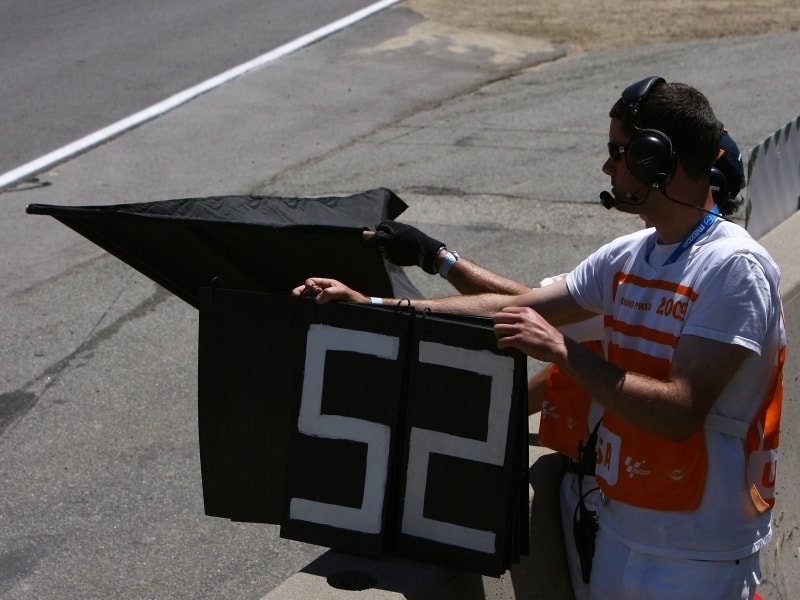
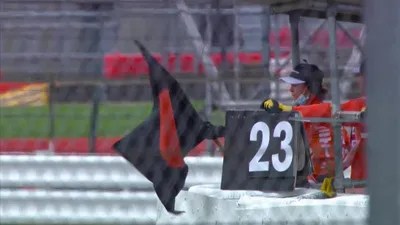
Black Flag with Orange Circle – This indicates a technical issue with a bike that poses danger to the rider or those around them. They must make their way to the pits as quickly as possible.
MotoGP Penalties:
MotoGP enforces a variety of penalties to ensure fair competition and safety on track. These range from gentle warnings to severe sanctions and disqualifications. These penalties are divided into two groups that cover technical regulations concerning the bike and behavioural regulations that apply to the rider.
Penalty Types:
Warnings – A warning serves as a reminder for minor violations such as exceeding track limits three times.
Fines – Riders or teams can be fined up to €50,000 for non-safety-related infractions.
Position Change – Gaining an unfair advantage by going off track or in other unusual circumstances can result in a rider being asked to concede a position.
Long Lap Penalty – This requires a rider to take a slower route around the outside of a specified corner.
Ride-through Penalty – This involves the rider passing through the pit lane at a restricted speed.
Time Penalties – Added to the final race results for rule breaches – these can be as little as one second and can be applied for infringements such as overtaking under a yellow flag.
Grid Penalties – Applied for qualifying misdemeanours forcing a rider to drop positions on the grid.
Disqualification – Invalidates a rider’s results for more serious rule violations.
Champions
Riders’ Champions
| Year | Champion | Constructor | Team | Points |
|---|---|---|---|---|
| 2015 | Jorge Lorenzo | Yamaha | Movistar Yamaha MotoGP | 330 |
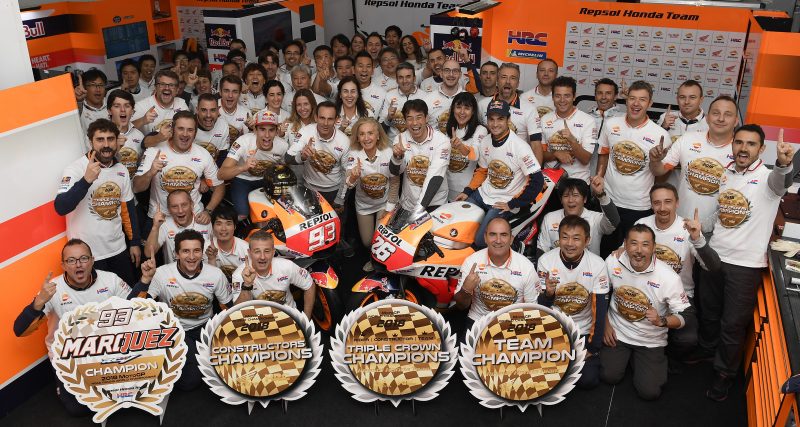
| 2016 | Marc Marquez | Honda | Repsol Honda Team | 298 |
| 2017 | Marc Marquez | Honda | Repsol Honda Team | 298 |
| 2018 | Marc Marquez | Honda | Repsol Honda Team | 321 |
| 2019 | Marc Marquez | Honda | Repsol Honda Team | 420 |
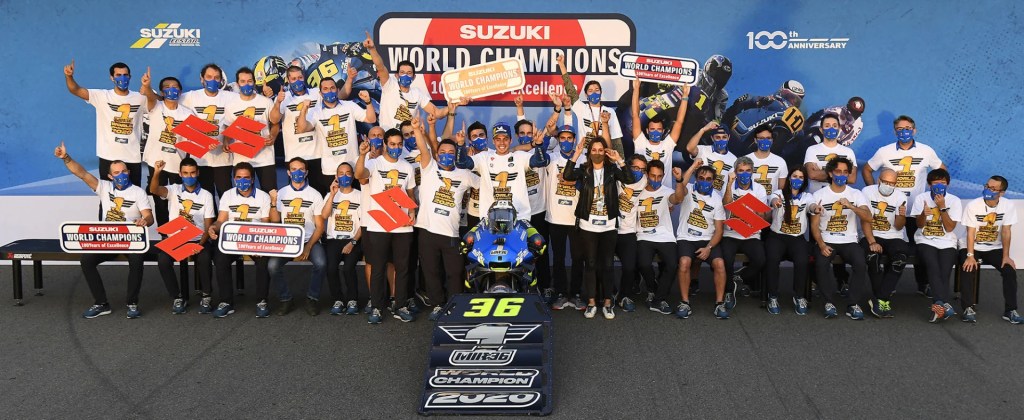
| 2020 | Joan Mir | Suzuki | Team Suzuki Ecstar | 171 |
| 2021 | Fabio Quartararo | Yamaha | Monster Energy Yamaha MotoGP | 278 |
| 2022 | Francesco Bagnaia | Ducati | Ducati Lenovo Team | 265 |
| 2023 | Francesco Bagnaia | Ducati | Ducati Lenovo Team | 467 |
| 2024 | Jorge Martin | Ducati | Prima Pramac Racing | 508 |
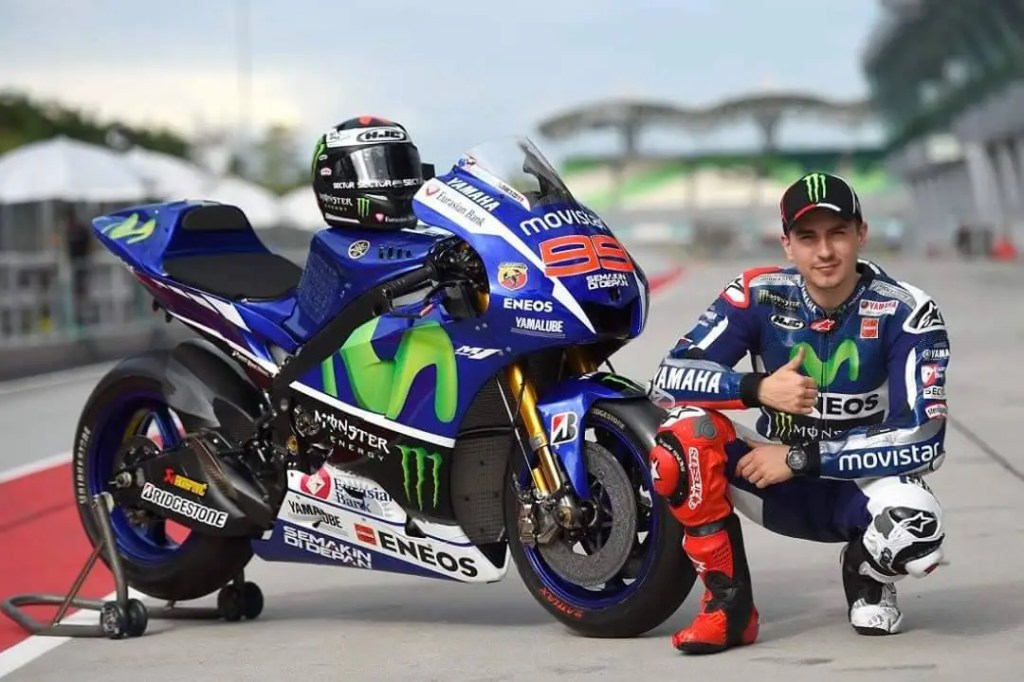
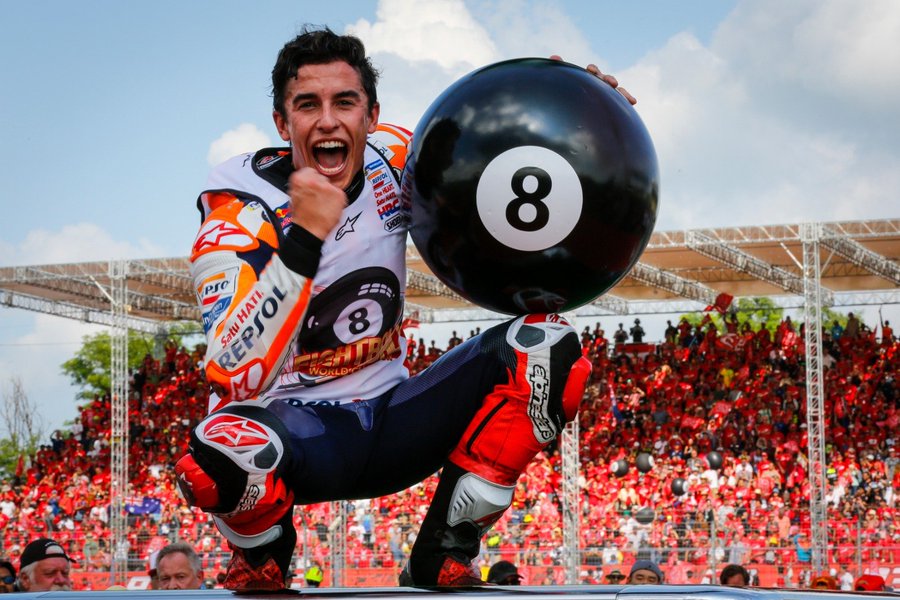
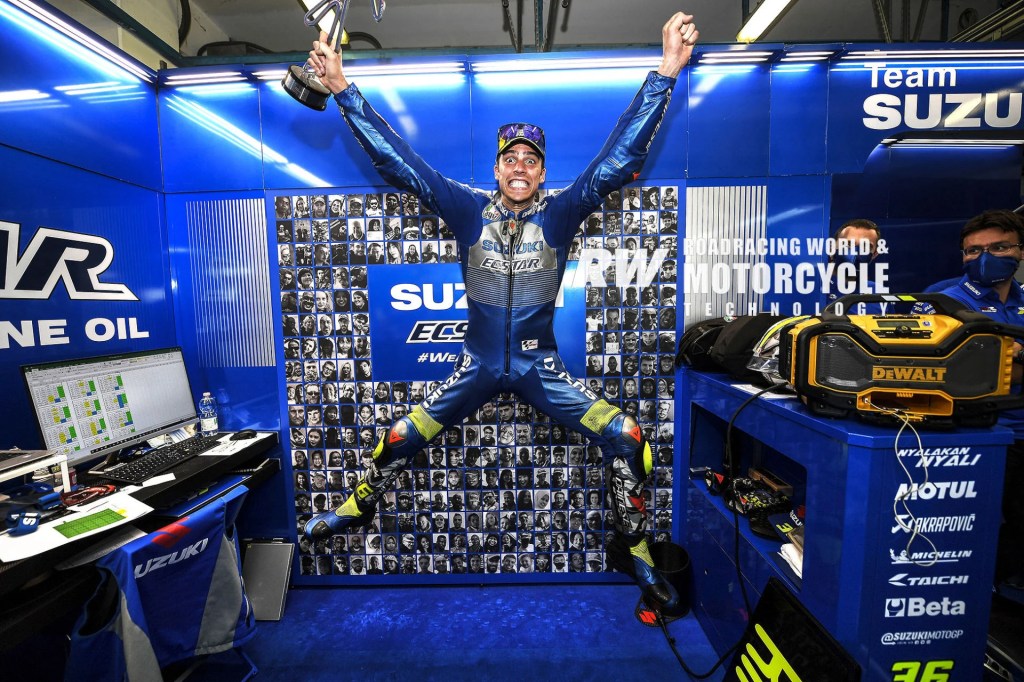
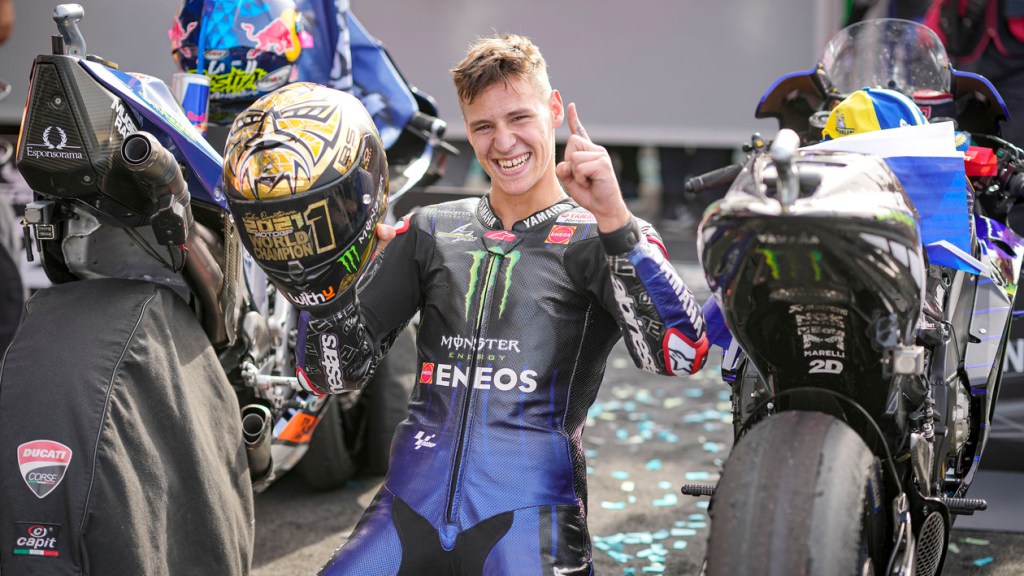
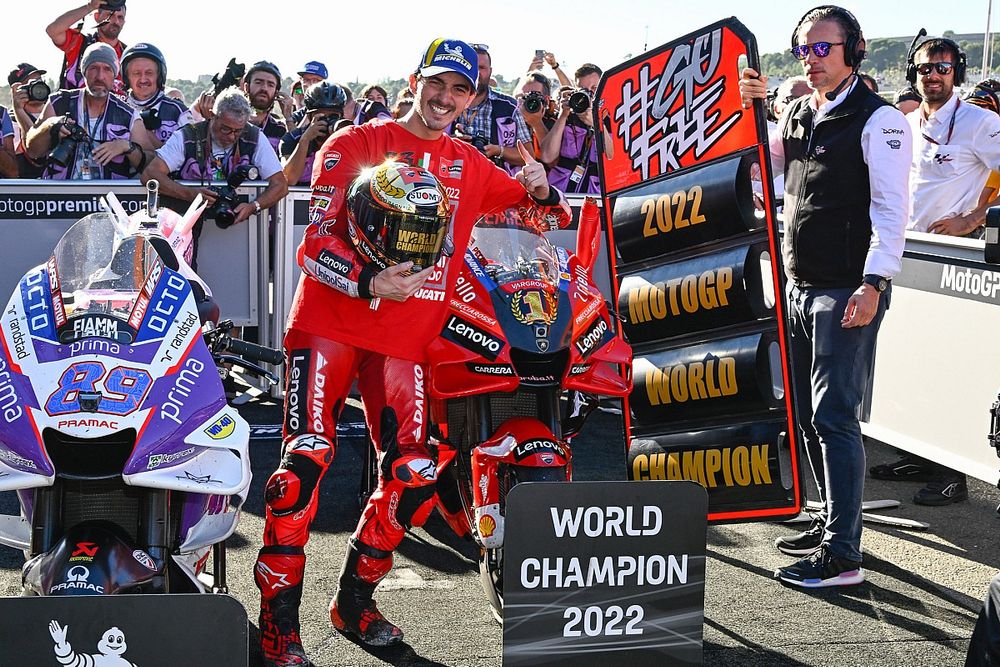
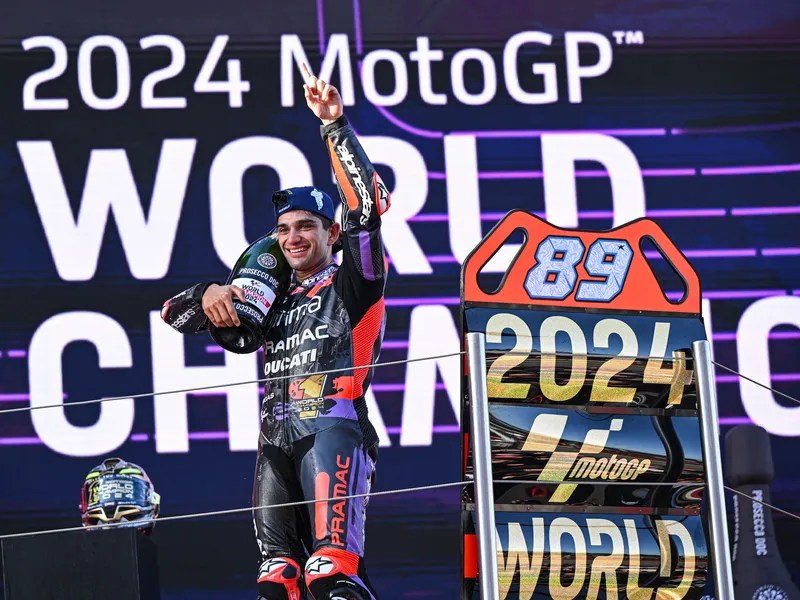
Teams
| Year | Teams’ Champion | Points |
|---|---|---|
| 2015 | Movistar Yamaha MotoGP | 655 |
| 2016 | Movistar Yamaha MotoGP | 482 |
| 2017 | Repsol Honda Team | 508 |
| 2018 | Repsol Honda Team | 451 |
| 2019 | Repsol Honda Team | 458 |
| 2020 | Team Suzuki Ecstar | 310 |
| 2021 | Ducati Lenovo Team | 433 |
| 2022 | Ducati Lenovo Team | 454 |
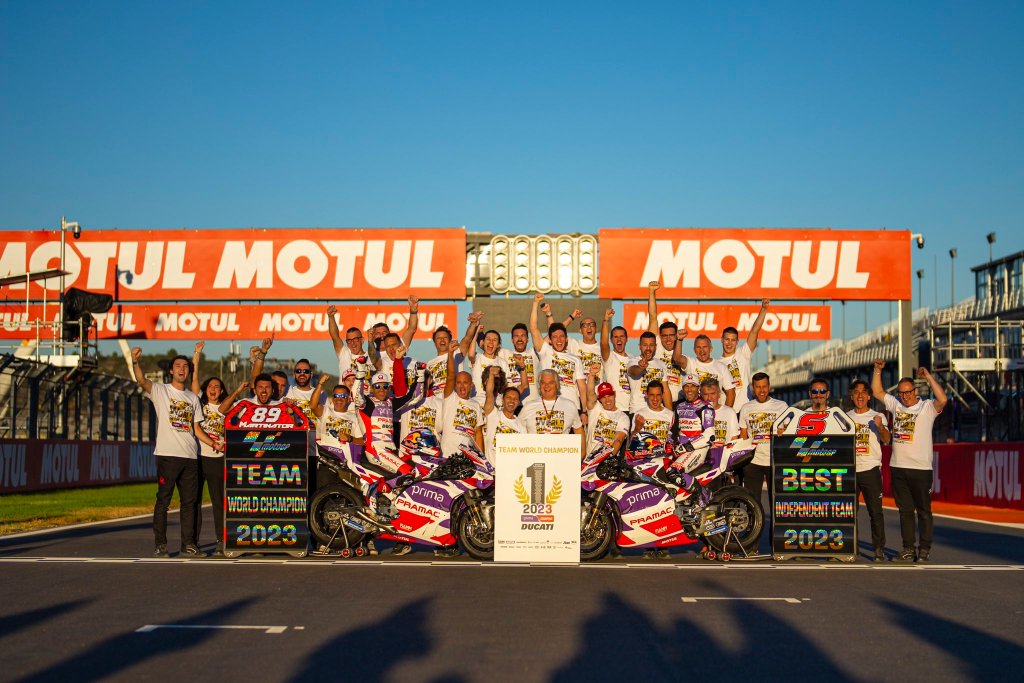
| 2023 | Prima Pramac Racing | 653 |
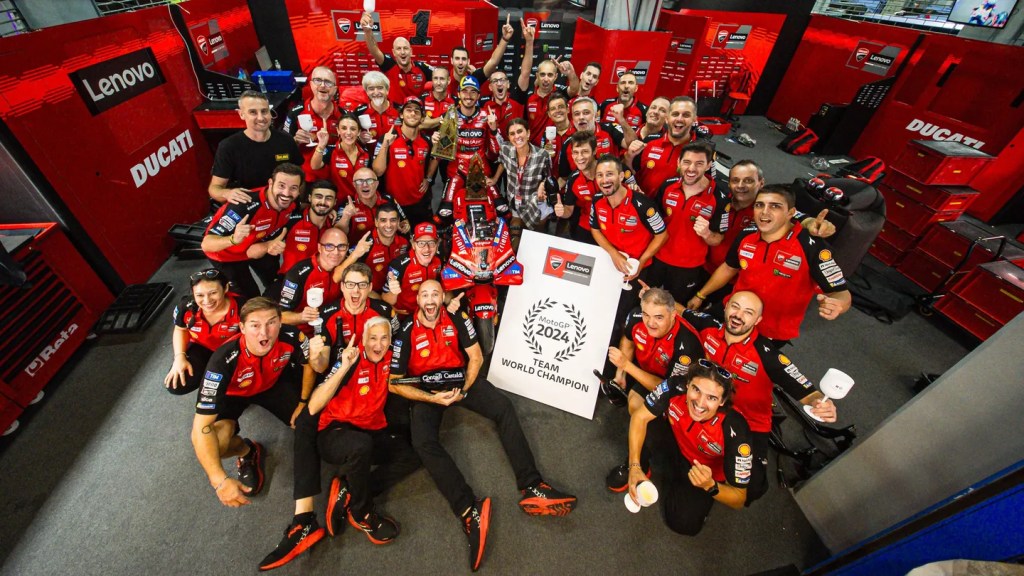
| 2024 | Ducati Lenovo Team | 884 |
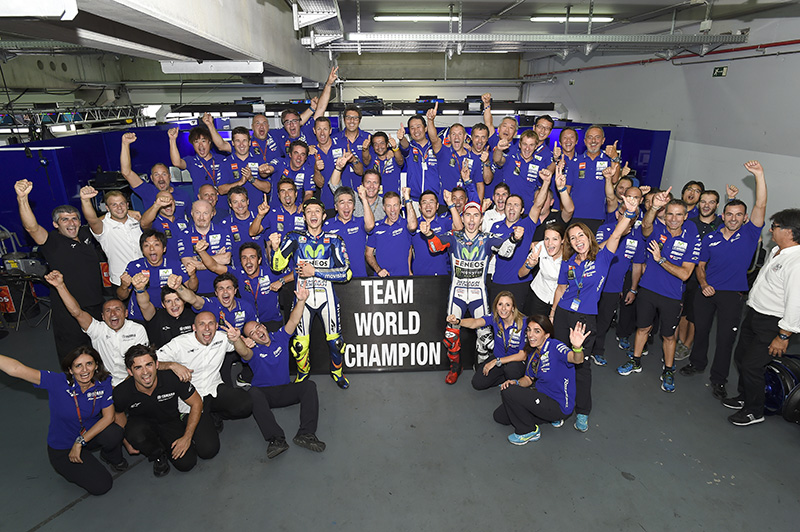
 parc femme
Leave a comment